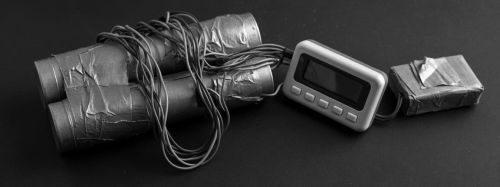
A “hoax device” may look like a bomb, but it is not real. Even so, possessing, using, or placing one in Massachusetts can lead to serious felony charges.
Under Massachusetts law, a hoax device is an object that appears to be a real explosive, destructive device, or chemical, biological, or nuclear weapon—but does not actually work. The key is how it looks to a reasonable person and the intent behind having or placing it.
This post explains the law in plain language: what counts as a hoax device, what the Commonwealth must prove, possible penalties, and common defenses. If you or someone you know is facing this charge, understanding these points is the first step toward protecting your rights.
What Exactly Is a Hoax Device?
In simple terms, a hoax device is a fake that looks real enough to scare people.
Massachusetts law (G.L. c. 266, § 101 and § 102(b)) defines a hoax device as something that:
- Is actually inoperable (it cannot explode or cause harm the way a real device would), and
- Would appear to a reasonable person to be one of the following:
- An explosive
- A destructive or incendiary device or substance
- A chemical weapon
- A biological weapon
- A nuclear weapon (or something that releases harmful radiation)
Examples can include a fake pipe bomb made of harmless materials, a package with wires and a clock that does not actually function as an explosive, or other items designed to look dangerous. The law focuses on appearance and the fear it can create, not on whether the device could ever work.
The Crime: Possession, Use, or Placement of a Hoax Device
It is a crime in Massachusetts to possess, use, or place a hoax device—or to cause someone else to do so—without lawful authority and with the intent to cause anxiety, unrest, fear, or personal discomfort.
The statute is G.L. c. 266, § 102(b). To convict someone, the Commonwealth must prove four elements beyond a reasonable doubt:
- The person possessed, used, or placed the device (or caused another person to do so, knowingly or unknowingly).
- The item was a hoax device.
- The person acted with the specific intent to cause anxiety, unrest, fear, or personal discomfort to another person or group.
- The person had no lawful authority to do so.
Every one of these elements must be proven. If the prosecution fails on any single element, the charge cannot stand.
What Does “Possession” Mean?
Possession is broader than just holding something in your hand.
Under Massachusetts law, possession generally requires:
- Knowledge that the item exists
- The ability to control it
- The intent to control it
You can also be charged under the idea of joint possession (sharing control with someone else). Simply having an item in a bag, car, or shared space can sometimes support a possession charge if the other elements are met. Context matters a great deal in these cases.
Key Legal Definitions
The statute provides clear definitions that help determine whether something qualifies as a hoax device:
- Explosive: Any element, compound, or mixture made, designed, or used to produce an explosion that would cause physical harm to people or property.
- Destructive or incendiary device or substance: An explosive, article, or device designed to cause physical harm by fire, explosion, or detonation, and that includes a substance capable of being ignited.
- Chemical weapon: A toxic chemical or substance (or ammunition or device) designed to cause death or bodily harm through the release of a toxic chemical.
- Biological weapon: Something specifically prepared to cause death, disease, or biological harm in living organisms, or to damage food, water, equipment, or the environment.
- Nuclear weapon: A device designed to cause injury or death through the release of radiation or radiological material.
A hoax version of any of these is something that looks real but is not operable.
Is This a Felony? What Are the Penalties?
Yes. Possession, use, or placement of a hoax device is a felony in Massachusetts.
A felony is a crime that can be punished by time in state prison. Penalties under G.L. c. 266, § 102(b) can include:
- Up to 2½ years in the House of Correction, or
- Up to 5 years in state prison, or
- A fine of up to $10,000, or
- Both a fine and imprisonment
There is no mandatory minimum sentence for this particular offense. That means a judge has more flexibility than in some other cases involving real explosives or certain firearm charges. Still, a felony conviction carries lasting consequences beyond the sentence itself—employment, housing, professional licensing, immigration status, and firearms rights can all be affected. For more on these longer-term impacts, see Other Penalties of a Criminal Charge.
Related conduct, such as making a false bomb threat under other statutes (for example, G.L. c. 269, § 14), can carry even higher potential penalties, including longer prison terms and restitution for the costs of emergency responses.
Possible Defenses
Every case is different, but common defense approaches include challenging one or more of the required elements:
- The item was not actually a “hoax device” under the legal definition (it did not appear to a reasonable person to be a real explosive or weapon).
- The defendant did not possess, use, or place the device (or cause someone else to do so).
- There was no intent to cause anxiety, fear, unrest, or personal discomfort.
- The defendant had lawful authority (for example, certain law enforcement or public safety activities are exempt).
- Problems with how evidence was obtained or identified.
Because the Commonwealth must prove every element beyond a reasonable doubt, a careful review of the facts, the physical item, witness statements, and the surrounding circumstances is essential. Early investigation by an experienced defense attorney can make a significant difference. Understanding possible dispositions after arraignment is also important when evaluating options.
Why These Cases Matter and What to Do Next
Hoax device cases are treated seriously because they can trigger large-scale emergency responses, evacuations, and public fear—even when the device is fake. Schools, workplaces, transit systems, and public buildings are especially sensitive locations.
If you are under investigation or have already been charged, do not discuss the facts of the case with anyone other than your lawyer. Statements made to police, friends, or on social media can be used against you. Knowing what happens at an arraignment can also help you prepare for the first court appearance.
An experienced Massachusetts criminal defense attorney can evaluate the strength of the evidence, identify possible defenses, negotiate with prosecutors (including exploring plea options), and protect your rights at every stage—from arraignment through trial or resolution. Options may include challenging the charge, seeking a reduction, or pursuing a disposition that limits long-term damage to your record.
Key Takeaways
- A hoax device looks real but does not work.
- Possessing, using, or placing one with the intent to cause fear is a felony.
- The prosecution must prove four specific elements beyond a reasonable doubt.
- Penalties can include up to 5 years in state prison and significant fines.
- Strong defenses often focus on whether the item truly met the legal definition or whether the required intent existed.
- Early legal help is critical.
IF YOU OR A LOVED ONE HAVE BEEN CHARGED WITH A FELONY, AND YOU NEED AN EXPERIENCED CRIMINAL DEFENSE LAWYER WORKING ON YOUR SIDE TO PROTECT YOUR RIGHTS, PLEASE CONTACTCRIMINAL DEFENSE ATTORNEY WILLIAM J. BARABINO.
CALL 781-393-5900 TO LEARN MORE ABOUT YOUR AVAILABLE DEFENSES.
Related Posts
<;