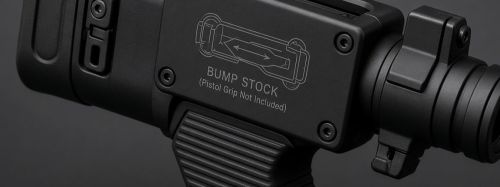
Massachusetts makes it a serious felony to own, possess, or carry a bump stock, and the same prohibition covers other devices that make a semiautomatic firearm fire faster. The definitions live in G.L. c. 140, § 121. The crime and the penalty live in G.L. c. 269, § 10(c). After the 2024 firearms overhaul, the statute lists bump stocks, rapid-fire trigger activators, trigger modifiers, and automatic parts by name. A conviction carries state-prison time measured in years, with a mandatory minimum drawn from § 10(a).
At a Glance: Bump Stocks & Rapid-Fire Devices
Felony
state prison for life or any term of years
18-month minimum
§ 10(c) incorporates the mandatory minimum in § 10(a)
Owns, possesses, or carries
on your person or under your control in a vehicle
Broader than bump stocks
also covers trigger modifiers, rapid-fire activators, and automatic parts
The law: G.L. c. 140, § 121; G.L. c. 269, § 10(c); St. 2017, c. 110; St. 2024, c. 135
What the Law Covers
G.L. c. 269, § 10(c) makes it a crime to own, possess, or carry on your person, or to carry on your person or under your control in a vehicle, any of the following, as defined in G.L. c. 140, § 121:
- Bump stock: a device that increases the rate of fire by using the weapon’s recoil to create a reciprocating action that helps the trigger fire repeatedly.
- Rapid-fire trigger activator: a manual, power-driven, or electronic device designed to increase a semiautomatic firearm’s rate of fire when attached, or another device or combination of parts designed to substantially increase that rate of fire above the firearm’s standard rate. Adjusting trigger pull weight or replacing a magazine spring does not count.
- Trigger modifier: any modification that repeatedly activates the trigger, including trigger cranks, binary triggers, and hellfire triggers.
- Automatic part: any device, part, or combination of parts that can be attached to a firearm and that allows automatic discharge of more than one shot with one continuous pull of the trigger, or that increases the rate of fire to mimic automatic fire.
The same paragraph also covers machine guns and sawed-off shotguns. A machine gun is a firearm that can automatically discharge more than one shot by a continuous activation of the trigger, whether built that way or modified by automatic conversion. Machine-gun possession without permission under G.L. c. 140, § 131 is a separate clause of § 10(c). The bump-stock and related-device clause does not use that § 131 permission language.
Devices Covered by § 10(c)
Bump stock
Recoil-driven stock that helps the trigger fire repeatedly
Own, possess, or carry — felony
Trigger modifier
Trigger cranks, binary triggers, hellfire triggers, and similar mods
Same § 10(c) penalty
Rapid-fire activator / automatic part
Devices or parts that raise the rate of fire or enable automatic fire
Same § 10(c) penalty
The law: G.L. c. 140, § 121; G.L. c. 269, § 10(c)
What the Commonwealth Must Prove
There is no District Court model instruction written specifically for bump-stock possession under § 10(c). Reading the statute with the usual possession rules used in other firearms instructions, the Commonwealth must prove beyond a reasonable doubt that you:
- owned, possessed, or carried on your person, or carried under your control in a vehicle, a bump stock, rapid-fire trigger activator, trigger modifier, or automatic part;
- knew the item was there; and
- the item met the statutory definition in § 121.
Possession means knowledge of the item plus the ability and intent to exercise control over it, directly or through another person. Mere presence near the item, even knowing it is there, is not enough.
Penalties
A conviction under § 10(c) is punishable by imprisonment in state prison for life, or for any term of years. The sentence is subject to the minimum requirements of § 10(a): the term may not be reduced below 18 months, may not be suspended, and the defendant is not eligible for probation, parole, work release, or furlough, or for good-conduct deductions, until 18 months have been served.
Because state prison is available, the offense is a felony. If the violation of § 10(c) is by means of a loaded firearm, § 10(n) adds a consecutive house-of-correction sentence of up to 2½ years.
Massachusetts Ban and Federal Law
Massachusetts banned bump stocks and trigger cranks in 2017 (St. 2017, c. 110), with the criminal prohibitions taking effect in early 2018. The 2024 firearms reform (St. 2024, c. 135) kept the ban and broadened the related definitions: rapid-fire trigger activators, trigger modifiers, and automatic parts are now listed expressly in § 10(c), and the machine-gun definition was expanded.
A 2018 ATF rule had tried to treat bump stocks as machineguns under federal law. In 2024 the U.S. Supreme Court held in Garland v. Cargill that ATF lacked authority to do that by regulation. That decision does not repeal Massachusetts’s own ban. Owning or possessing a bump stock here is still a § 10(c) felony, regardless of the federal classification.
Defenses
- Not a covered device: the item is not a bump stock, rapid-fire trigger activator, trigger modifier, or automatic part under the § 121 definitions.
- No possession or ownership: you did not own it, did not know it was there, or had no ability or intent to control it.
- Not carried or under control in a vehicle: the Commonwealth cannot prove the statutory acts of carrying or vehicle control.
- Unlawful search or seizure: the device was found through a stop, search, or warrant that violated the Fourth Amendment or art. 14.
- Identification: someone else owned or controlled the item.
Why a Lawyer Matters
§ 10(c) carries some of the heaviest penalties in the firearms chapter. The definitions are technical, and the difference between a lawful accessory and a prohibited rapid-fire device can decide the case. Attorney William J. Barabino has defended criminal cases for 23 years. Call 781-393-5900.
Related Charges
- Possession of a firearm (G.L. c. 269, § 10(a)): ordinary firearm, rifle, or shotgun without a required license — a different subsection with its own elements.
- Carrying a firearm (G.L. c. 269, § 10(a)): carrying or vehicle control of a firearm outside the home or business without a license.
- Large capacity magazines (G.L. c. 140, § 131M; c. 269, § 10(m)): magazines and assault-style firearms under a separate ban, not rapid-fire trigger devices.
- Firearm while committing a felony (G.L. c. 265, § 18B): an enhancement for possessing a firearm during another felony.
- Gun storage (G.L. c. 140, § 131L): how firearms must be secured at home; a storage violation, not a rapid-fire device charge.
Disclaimer
This information is for general educational purposes only and not legal advice. Laws change. For advice about a specific case, speak with a licensed Massachusetts attorney.